Every city has its small daily theatre
In Dubrovnik, one of them begins just before noon.
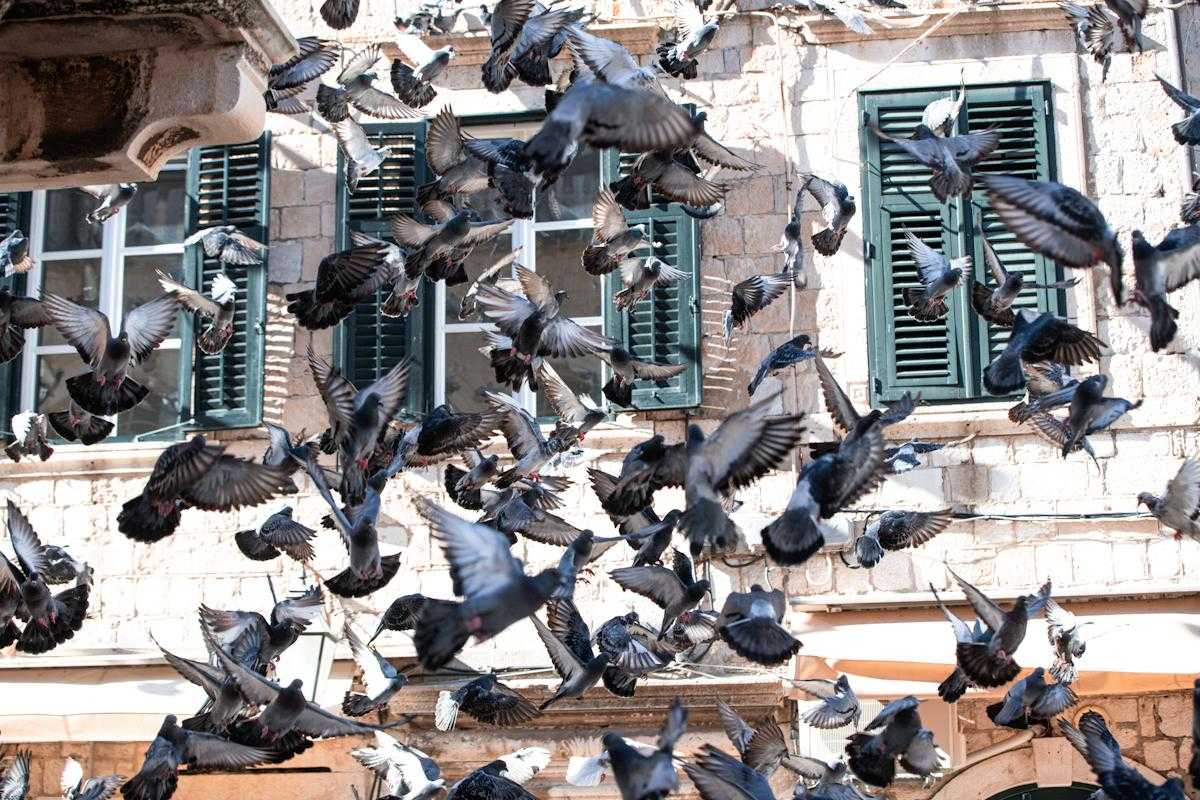
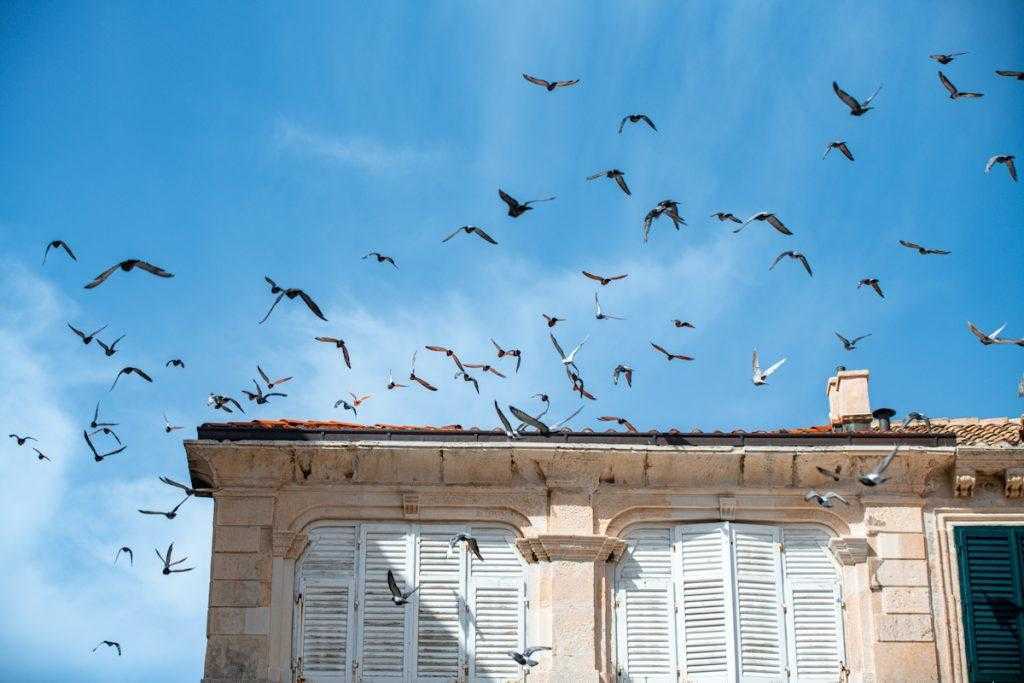
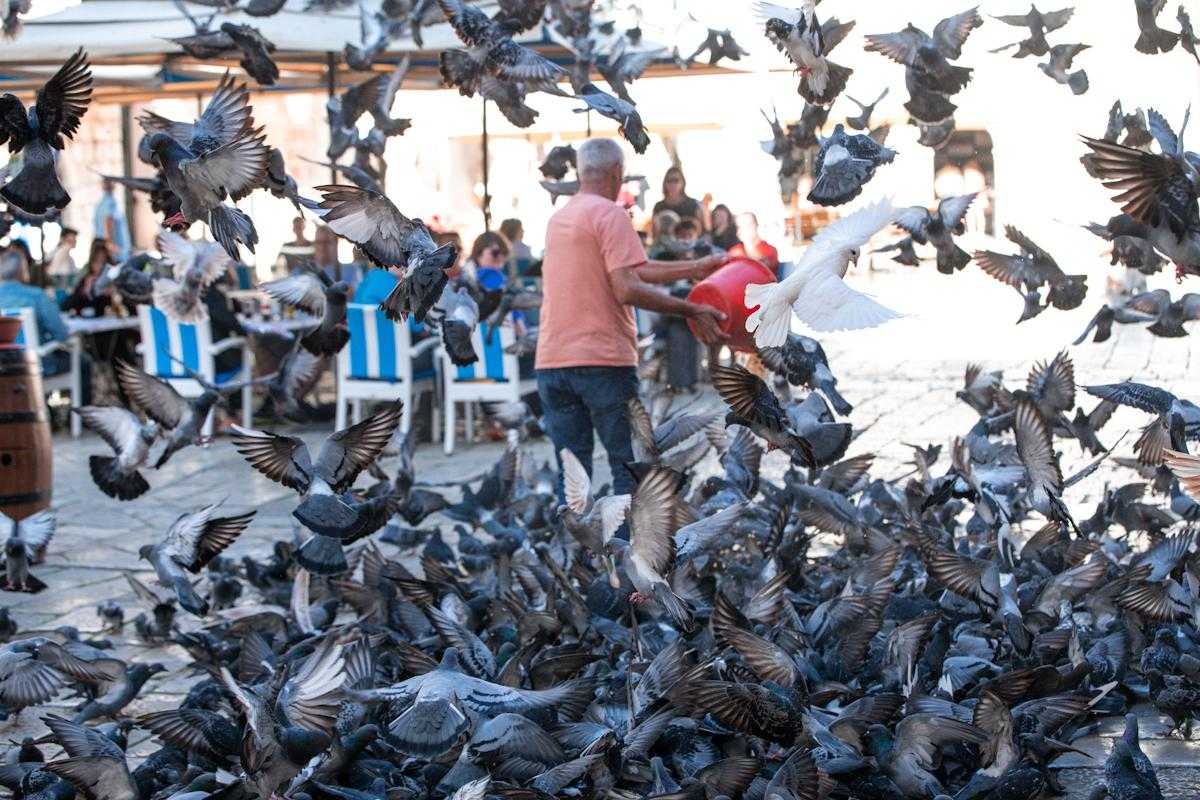
A few minutes before the bells strike, the pigeons start gathering above Gundulić Square. They appear on roofs, cables and ledges, as if they already know exactly what is coming. And then, at noon, the square fills with wings. It is a ritual that has been described for years in local and visitor writing: every day, at exactly the same time, Dubrovnik’s pigeons gather in the square for their meal.
What makes the scene so memorable is not only the number of birds, but the precision of it. The timing is so fixed that the pigeons seem to anticipate it. In public descriptions of the square, the city notes that every day, on the stroke of noon, hundreds of pigeons flock there and that funds for their daily feed are even secured in the city budget.
More than birds, they are part of the Dubrovnik picture
It would be easy to dismiss them as just another familiar urban detail. But in Dubrovnik, the pigeons feel more woven into the city than that.
They belong to the daily rhythm of the Old Town. They are part of Gundulić Square just as the market is, just as the bells are, just as the shift from morning trade to afternoon pause is. One long-running local description captures this especially well: the square changes character throughout the day, and just before noon the pigeons become its next act.
That is why they feel so recognisable. Not because they are grand, but because they return. Again and again, at the same hour, in the same place.
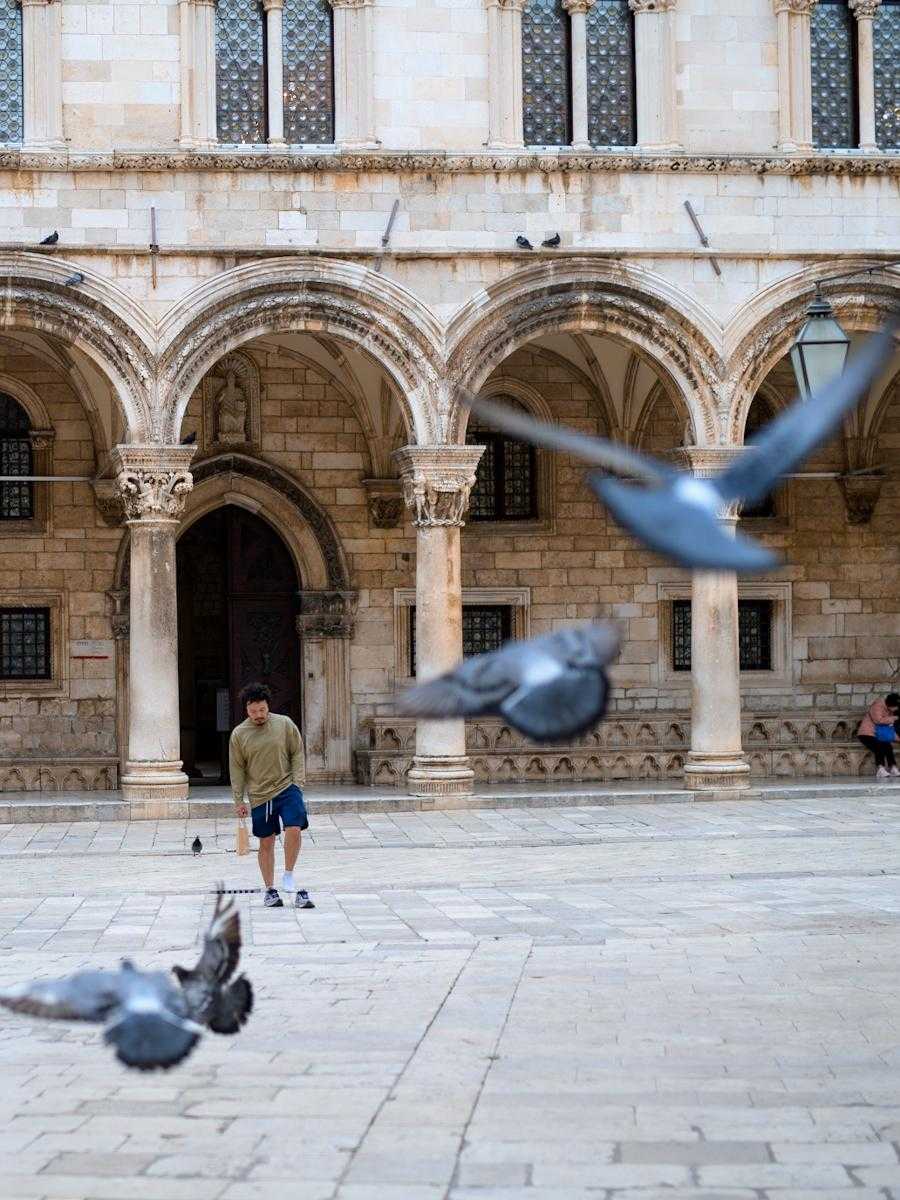
Children still love them
For children, the pigeons are often one of the simplest and most immediate Dubrovnik experiences.
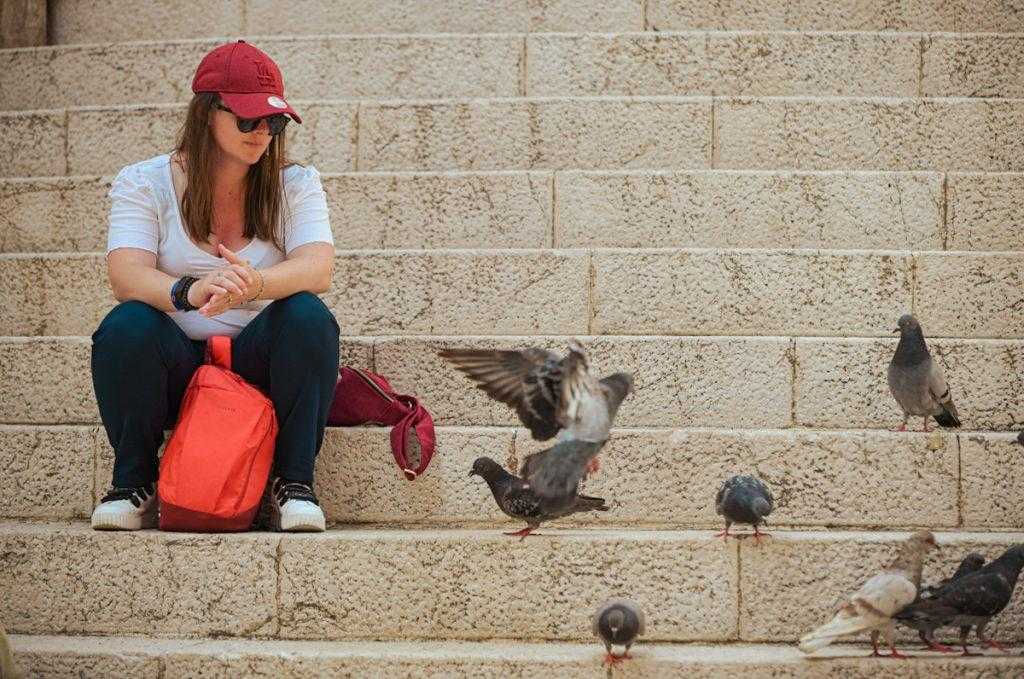
Descriptions of the noon feeding regularly note the mixture of excitement, delight and small chaos that follows once the birds land. Some children laugh, some run, some hesitate, and many are fascinated by the sudden movement all around them. Visitor accounts also note that children love chasing or feeding them, even when adults are sometimes less enthusiastic.
That may be part of why the ritual survives so strongly in memory. It is visual, noisy, a little unruly and completely alive. In a city so often admired for its stone and stillness, the pigeons bring a burst of movement right into the middle of the square.
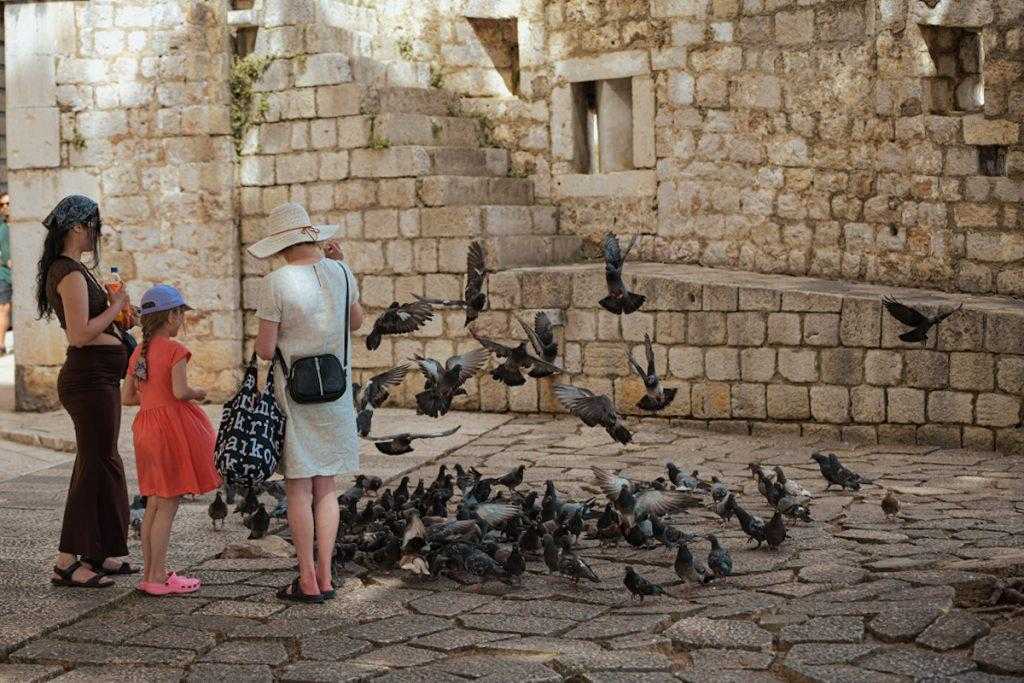
A small ritual people begin to expect
The feeding itself does not last long. Within minutes, the grain is gone and the birds scatter, leaving Gundulić Square to continue with the rest of its day. But the ritual has become so established that many visitors now seek it out deliberately, while locals simply take it as part of the city’s daily choreography. Multiple local and travel sources describe it as an event worth seeing, precisely because it happens so reliably at noon.
It is one of those Dubrovnik details that can seem small at first and strangely essential later.
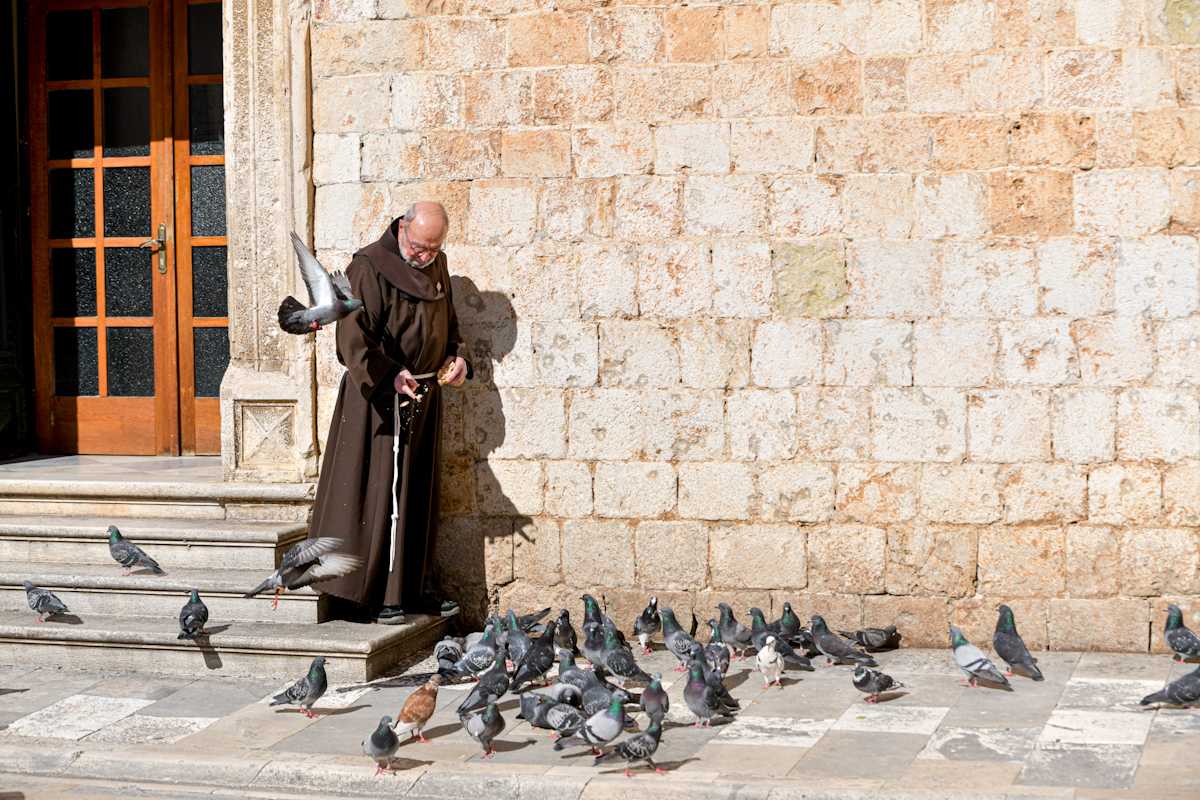
Not a monument, but still a city sign
Dubrovnik is full of symbols people photograph immediately: the walls, Stradun, the harbour, Lokrum in the distance. The pigeons belong to a different category. They are not a monument, but they are still one of the city’s recognisable signs.
They tell you something about repetition, memory and the way a place becomes itself through small habits as much as through famous views. At noon in Gundulić Square, Dubrovnik does not only look like Dubrovnik. It sounds like it too.