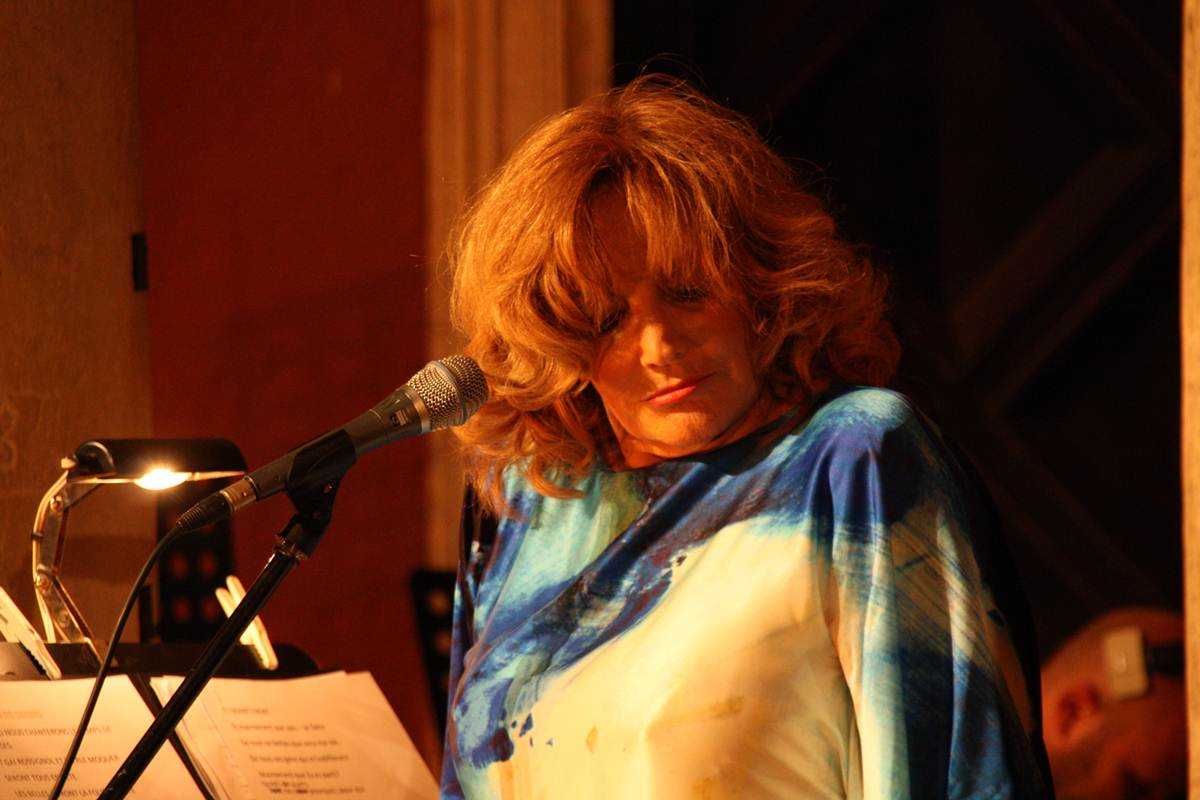
Some voices belong to a city long after they have crossed its borders. In the case of Tereza Kesovija, that city is Dubrovnik, elegant, emotional, dramatic, proud and impossible to forget.
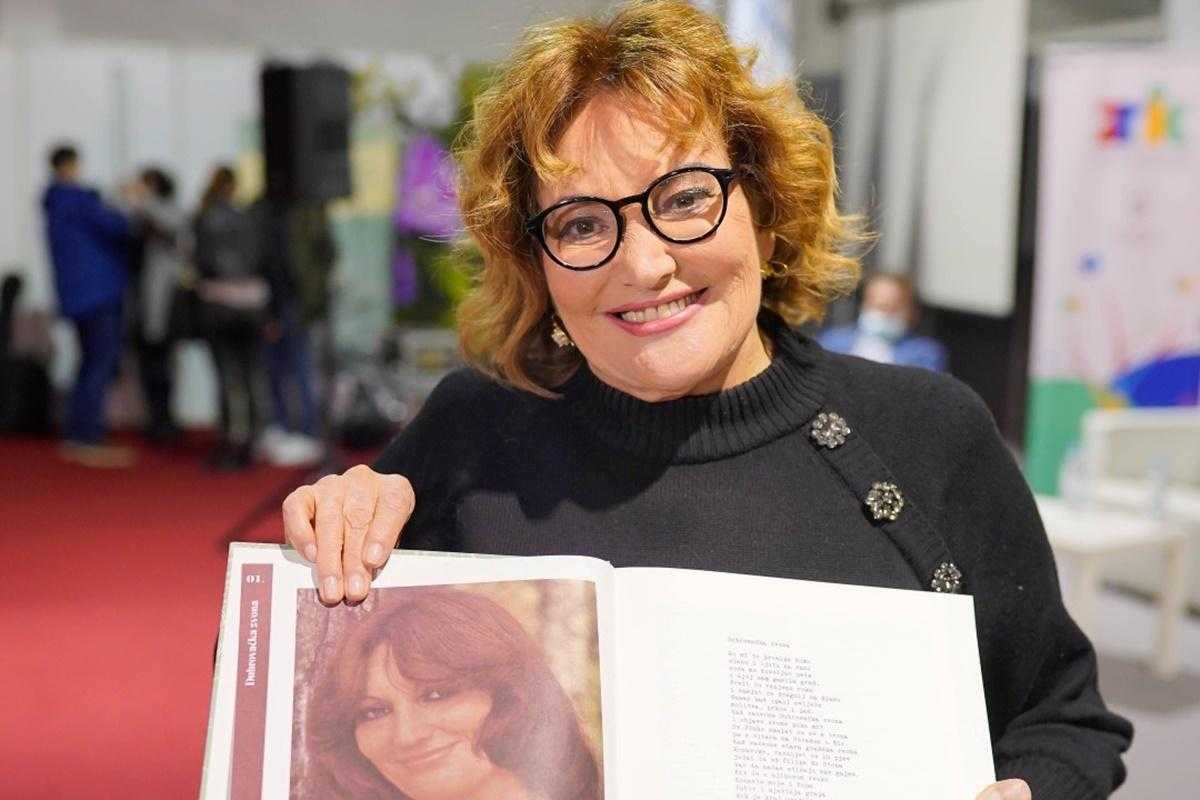
Born in Dubrovnik in 1938, Tereza grew up between the city and Konavle, carrying with her the temperament of the south, the discipline of a classically trained musician and the unmistakable emotional strength that would later define her career. Before becoming one of the most recognisable voices of the former Yugoslav and Croatian music scene, she studied flute and received her early musical education in Dubrovnik, later continuing at the Academy of Music in Zagreb.
From Dubrovnik to the Great European Stages
Tereza Kesovija’s career was never meant to remain local. From her earliest appearances at music festivals and competitions, it was clear that her voice had a reach far beyond the region. With a powerful vocal range, theatrical presence and a gift for chanson, she became one of the rare artists from this part of Europe who could move naturally between languages, audiences and musical traditions.
Her career took a decisive international turn in the mid-1960s, when she moved to France. It was not an easy beginning. She arrived without speaking French, but with a voice, charisma and stage presence that quickly opened doors. In France, she built one of the most remarkable international chapters of any Croatian singer’s career.
The French Chapter
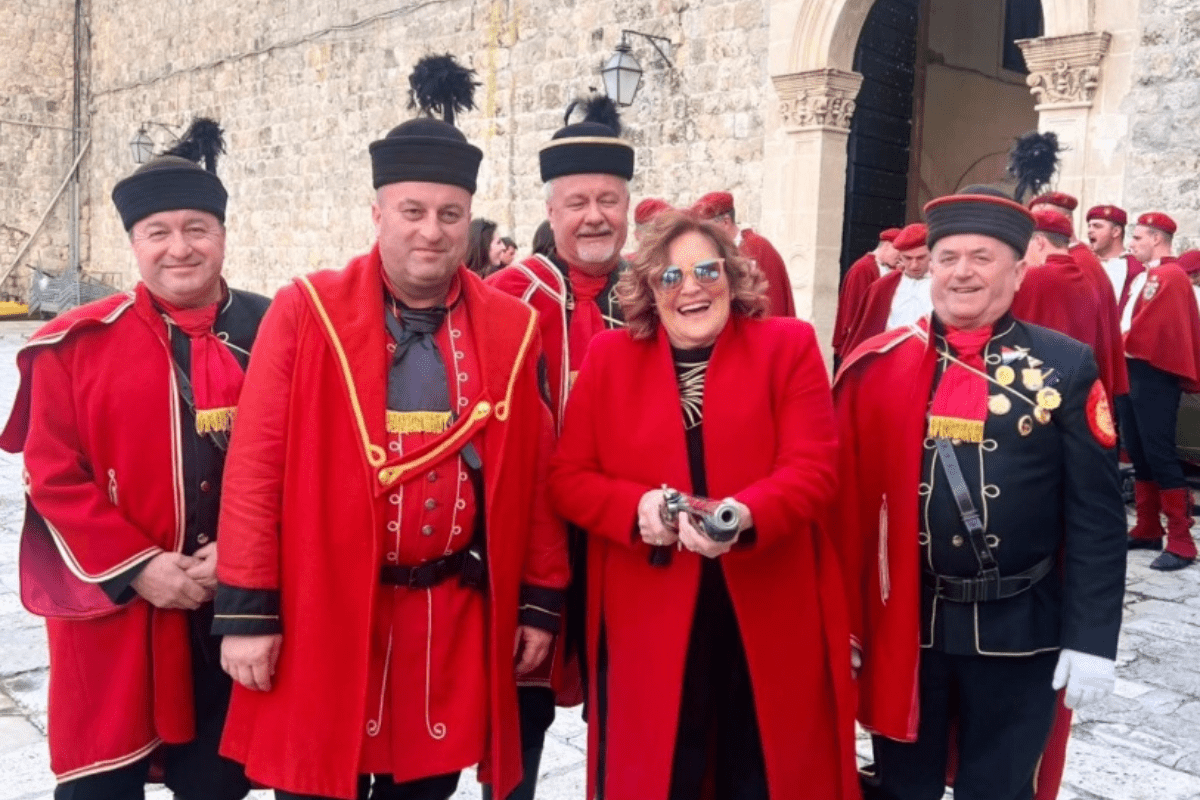
France became one of the defining chapters of Tereza’s life and artistic identity. She was not simply a guest performer there; she became part of the French chanson world. French audiences recognised in her something rare: a Mediterranean voice with Slavic depth, capable of both grandeur and intimacy.
In 1966, she represented Monaco at the Eurovision Song Contest with “Bien plus fort”, becoming one of the few artists from this region to appear on the Eurovision stage under another country’s flag. A year later, her interpretation of “La chanson de Lara”, known from the film Doctor Zhivago, became one of her major French successes and confirmed her place among performers able to carry great emotion with elegance and force.
She would later also represent Yugoslavia at Eurovision in 1972 with “Muzika i ti”, further strengthening her status as an artist whose career was never limited by geography.
The French press admired her dramatic stage presence, her expressive voice and the intensity with which she performed. In France, Tereza was recognised not only as a singer, but as a true performer — an artist who did not simply interpret a song, but lived it on stage.
Tereza and the Olympia
Among the great symbols of her international career, one place stands out: L’Olympia in Paris.
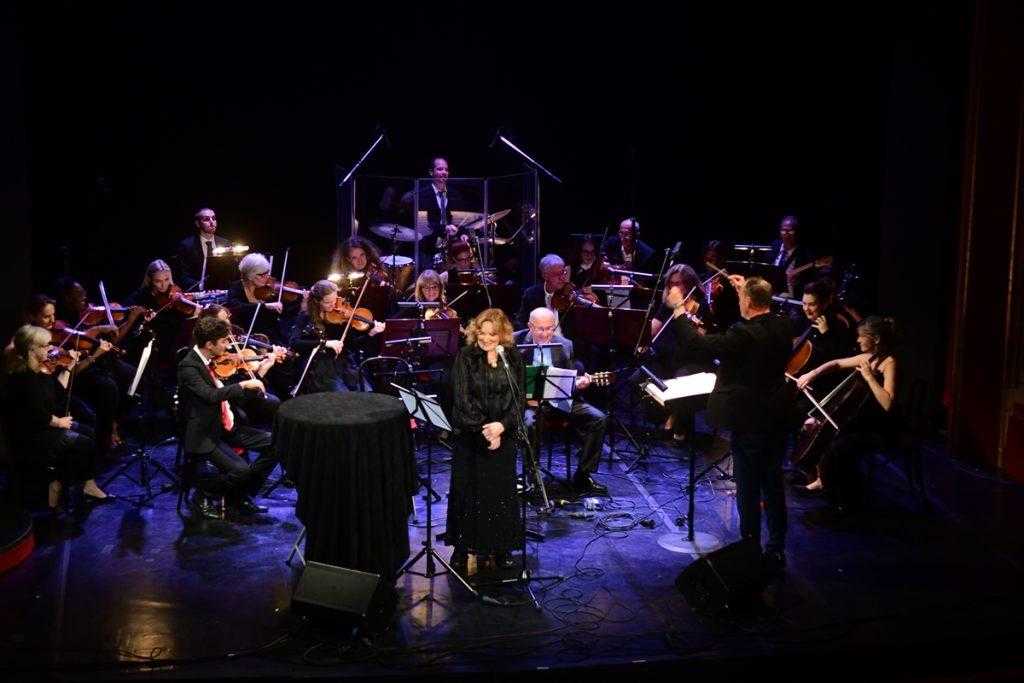
For any singer, performing at Olympia is more than a concert. It is a recognition. It means entering a legendary space that has welcomed some of the greatest names in music. Tereza Kesovija performed there several times, becoming one of the rare Croatian artists to return to that stage on more than one occasion.
Her appearances at Olympia remain among the most important moments of her French and international career. They confirmed what audiences had already recognised – that Tereza’s voice belonged equally to intimate chanson and to the grand concert stage. In Paris, before an audience that understood both restraint and passion, she gave Dubrovnik, Croatia and the wider region a voice that could stand confidently among Europe’s finest.
For Dubrovnik, this matters. Because every time Tereza stood on that Parisian stage, she did not stand there only as a singer from Croatia. She stood there also as a voice from Dubrovnik, a voice shaped by the south, by loss and strength, by music and memory.

A Career of Emotion, Strength and Recognition
Across decades, Tereza Kesovija built a career that connected festivals, concert halls, television audiences and generations of listeners. She performed around the world, recorded in several languages and became one of the most awarded and respected singers from this region.
Her songs, from “Nono, moj dobri Nono” to “Moja posljednja i prva ljubavi”, “Prijatelji stari, gdje ste” and many others, became part of the emotional memory of audiences across Croatia and the wider region. She sang of love, longing, homeland, friendship and resilience with a directness that made her music feel personal, even when performed on the grandest stages.
Her life and career were also marked by loss, dignity and remarkable inner strength. Through changing times, personal hardships and the transformations of the music industry, Tereza remained recognisable by the same qualities that first brought her to the stage: discipline, emotion and an unmistakable voice.
The Dubrovnik in Her Voice
What makes Tereza Kesovija a true Dubrovnik Face is not only the fact that she was born here. It is the way she carries the city in her artistic identity.
There is something unmistakably Dubrovnik in her presence: dignity without distance, emotion without weakness, elegance without coldness. Like the city itself, she can be dramatic and restrained at the same time. Her voice has often carried the feeling of departure and belonging, themes deeply familiar to a city whose history has always been tied to travel, distance, sea routes and memory.
Tereza is one of those artists who made Dubrovnik recognisable not through images of stone walls and summer evenings, but through sound. Through a song. Through a phrase. Through the silence before the first note.

A Face the City Remembers
Every city has faces that become part of its collective memory. Some are seen every day on its streets. Some are remembered through sport, theatre, public life or music. Tereza Kesovija belongs to the rarest category: those who carry the city far away, and yet remain deeply connected to it.
From Dubrovnik and Konavle to Zagreb, Paris, Olympia and stages around the world, her life has been a journey of talent, discipline and emotion. But beneath the international career, the awards, the French chansons and the great concert halls, there remains a simple truth: Tereza Kesovija is one of Dubrovnik’s great voices.
And some voices do not fade. They become part of the city itself.
A Final Bow
After her recent concert in Split, anticipation is now turning towards Dubrovnik, where Tereza Kesovija is expected to bring her remarkable 65-year career to a deeply symbolic close. For her farewell, this legendary singer in her eighties has chosen three cities that carry special meaning in her life and career – Dubrovnik, Ljubljana and Zagreb.
For Dubrovnik, however, the concert will be more than another performance. It will be a final bow before the city that has always recognised her as one of its own. A moment of gratitude, memory and music, shared between Tereza and the audience that has followed her from the very beginning.
And perhaps that is the most fitting ending of all: Tereza Kesovija, after decades of songs, stages and standing ovations, closing a magnificent career in the city whose name has always been woven into her story.