The Old City Becomes a Diplomatic Stage
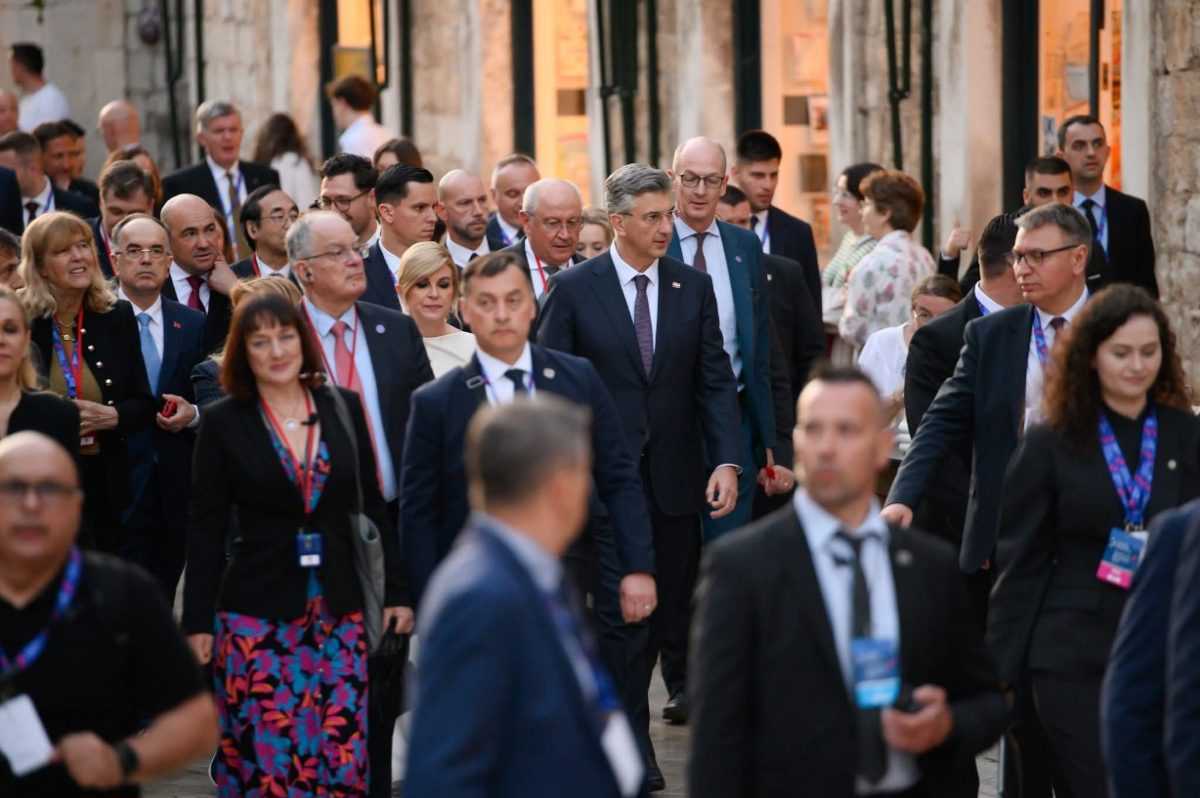
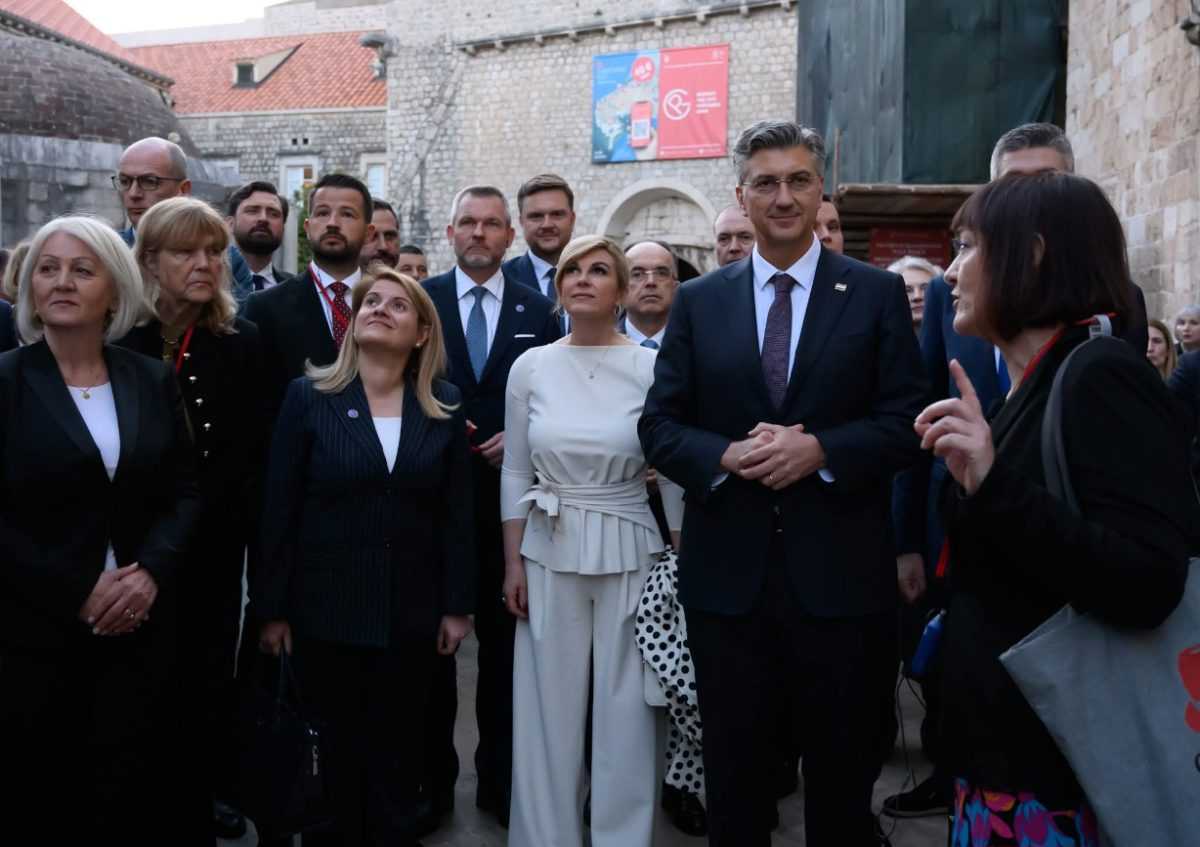
It was not an ordinary spring walk along the Stradun. This week, Dubrovnik’s most famous street became the setting for presidents, prime ministers, ministers, diplomats and international guests, as Croatian Prime Minister Andrej Plenković walked through the historic centre with high-level participants of the Three Seas Initiative Summit.
Among those in Dubrovnik were Polish President Karol Nawrocki, Czech President Petr Pavel, Lithuanian President Gitanas Nausėda, Latvian President Edgars Rinkēvičs, Slovak President Peter Pellegrini, as well as senior representatives from a number of other participating and partner countries. The American presence was also highly visible, led by U.S. Secretary of Energy Chris Wright and U.S. Ambassador to Croatia Nicole McGraw.
Surrounded by the limestone façades of the Old City, church bells, curious passers-by and the familiar rhythm of Dubrovnik in spring, the scene captured what this city does so well: turning global events into moments that feel both grand and intimate.
For a few hours, the Stradun was more than a promenade. It became a diplomatic stage.
A Summit and a Business Forum
The occasion was the 11th Three Seas Initiative Summit and the accompanying 8th Business Forum, held in Dubrovnik on 28 and 29 April 2026. Croatia, which currently holds the Presidency of the Three Seas Initiative, hosted the gathering, bringing together leaders of participating states, associated participating states, strategic partners and international financial institutions.
The Business Forum, held at Valamar Lacroma Hotel, gathered more than 1,200 policymakers, business leaders, investors and representatives of financial institutions, with discussions focused on transport, energy, digital industry, dual-use technologies and finance.
For Dubrovnik, the event carried additional symbolism. The Three Seas Initiative first took shape through the work of then Croatian President Kolinda Grabar-Kitarović and Polish President Andrzej Duda, while its inaugural summit was held in Dubrovnik in 2016. A decade later, the city once again found itself at the heart of this regional and transatlantic conversation.
Who Came to Dubrovnik
The summit brought together a striking mix of political, diplomatic and business figures. Alongside Croatian Prime Minister Andrej Plenković and Polish President Karol Nawrocki, Dubrovnik welcomed presidents and senior officials from across Central and Eastern Europe, as well as representatives of strategic partners including the United States, Germany, Japan, the European Commission, Turkey and Spain. During the Dubrovnik summit, Italy also joined the Initiative as a strategic partner.
Former Croatian President Kolinda Grabar-Kitarović also holds a special place in the story of this summit. As one of the founders of the Initiative, together with Andrzej Duda, her connection to the Dubrovnik gathering gave the event a sense of continuity — from the first summit held here in 2016 to the Initiative’s second decade.
The U.S. role attracted particular attention. Ambassador Nicole McGraw had announced important American investments and agreements related to artificial intelligence, energy and infrastructure, while U.S. Secretary of Energy Chris Wright represented Washington at the summit.
Why the Three Seas Initiative Matters
The Three Seas Initiative connects countries located between the Baltic, Adriatic and Black Seas. Today, it brings together 13 EU member states: Austria, Bulgaria, Croatia, the Czech Republic, Estonia, Greece, Hungary, Latvia, Lithuania, Poland, Romania, Slovakia and Slovenia. Its associated participating countries include Ukraine, Moldova, Albania and Montenegro.
Its focus is practical but ambitious: better transport links, stronger energy connections, digital development, infrastructure, investment and economic cooperation. The Dubrovnik Declaration described the Initiative as a strategic North–South axis and underlined the importance of the region for Europe’s resilience, growth and connectivity.
For Croatia, and especially for Dubrovnik, the summit was also a reminder of geography’s quiet power. The city stands at the edge of the Adriatic, but this week it was connected to a much wider map — one stretching across Europe and beyond.
A City Made for Diplomacy
There is something fitting about such a summit taking place in Dubrovnik. Long before it became one of the world’s most recognisable travel destinations, the city was a republic built on diplomacy, trade and careful negotiation.
The former Republic of Ragusa knew how to speak to larger powers, protect its interests and remain connected to the wider world. Centuries later, that diplomatic spirit still feels present within the city walls.
That is why the image of world leaders walking along the Stradun feels more than ceremonial. It connects the city’s past with its present.
More Than a Beautiful Backdrop
For visitors in Dubrovnik this week, the atmosphere was visibly different. Hotels, streets, restaurants and meeting venues were filled with delegations, security teams, media and guests. The city carried the energy of a major international event, while still keeping its familiar charm.
The summit may be political and economic in nature, but its presence in Dubrovnik also tells a broader story. This is not only a city people come to admire. It is a city where international meetings take place, partnerships are shaped and important conversations unfold.
With the Stradun as its stage and the Adriatic as its backdrop, Dubrovnik once again showed that it can be ancient and contemporary, intimate and global, a destination and a meeting point for the world.