A greener side of the city many visitors never expect
When people think of Dubrovnik, they usually imagine stone – walls, squares, stairways and sunlit streets polished by centuries. And they are right. But that is not the whole story.
What many visitors do not realise at first is that, tucked into and around the city’s historic fabric, there is also a quieter, greener Dubrovnik. A Dubrovnik of old gardens, enclosed greenery and cultivated spaces that soften the image of the city and reveal a different layer of its past.
Beyond walls and squares, there is also a garden city
As part of Dubrovnik Flower Market 2026, one of the programme’s most elegant events was the themed walk Through Dubrovnik’s Old Gardens, held in English and Croatian on 14 March 2026. The walk began in front of the TIC at Pile and invited participants to discover a side of Dubrovnik that often escapes the usual route through the city.
According to the programme description, while some gardens are found within the historic core itself, the area stretching from Pile and Konalo to Boninovo developed from the Renaissance onwards as a distinctive garden suburb, and much of that character has survived. During the walk, participants were introduced to the historical development of these gardens, several preserved examples, and the characteristics of the Dubrovnik Renaissance garden.
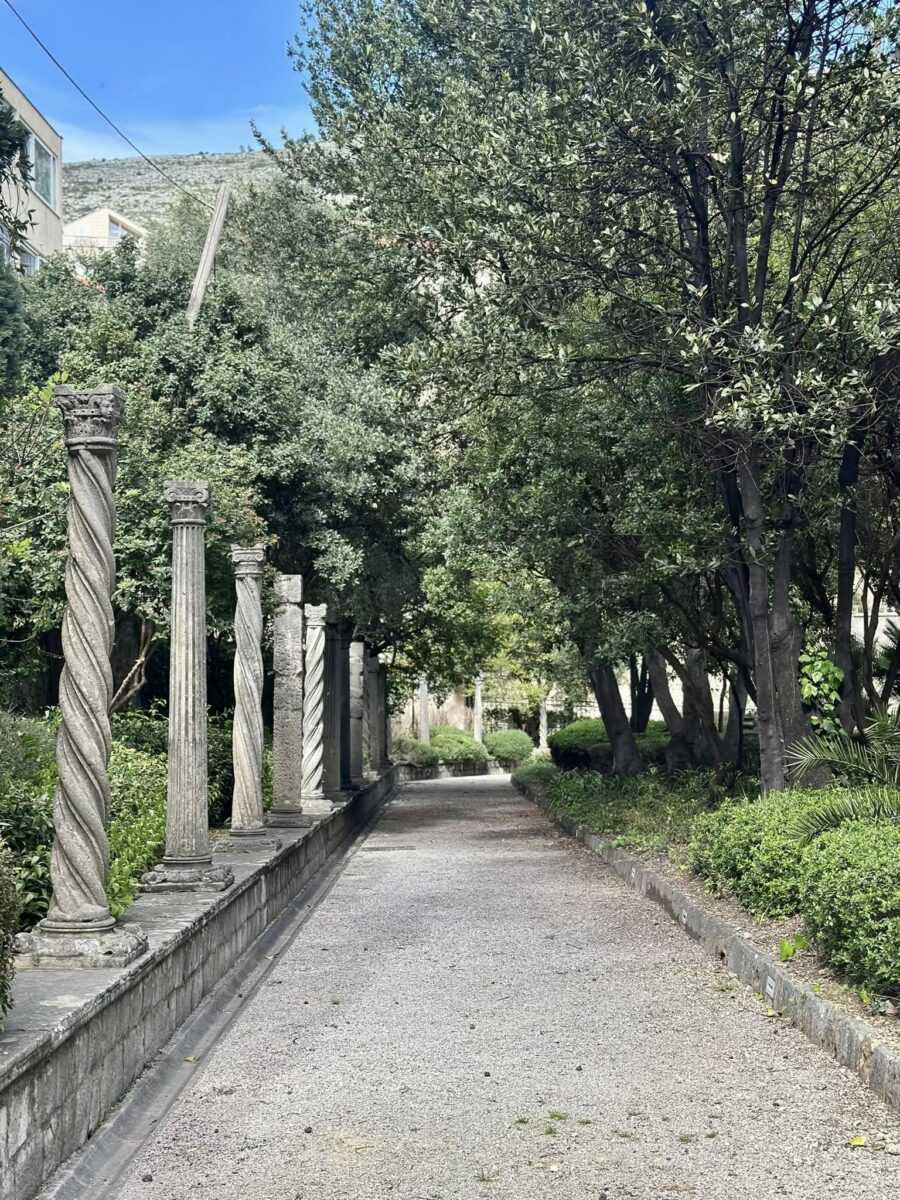
A softer side of Dubrovnik
That is what makes this story so appealing. Dubrovnik is famous for its stone, but it has always also had its cultivated, sheltered and more intimate spaces.
These gardens tell a different story about the city – one shaped not only by fortification and public grandeur, but also by retreat, cultivation, beauty and the relationship between architecture and plant life. They remind us that Dubrovnik was never only monumental. It was also designed to bloom. This is an editorial interpretation grounded in the event’s stated focus on historic gardens and Renaissance horticultural heritage.
An experience that changes the picture of the city
The old gardens walk formed part of the wider Dubrovnik Flower Market 2026, one of the city’s spring events dedicated to flowers, horticulture and outdoor programmes. That context gave the whole experience an especially fitting tone: it was not just a heritage walk, but a reminder that spring reveals parts of Dubrovnik many people do not notice immediately.
And perhaps that is the nicest thing about it. In a city people think they already know through its most famous images, the old gardens offer something unexpected, a greener, quieter Dubrovnik hidden in plain sight.

Photo: DSO